
Dear friends near and far
I hope this message finds you well, healthy and happy, on this first
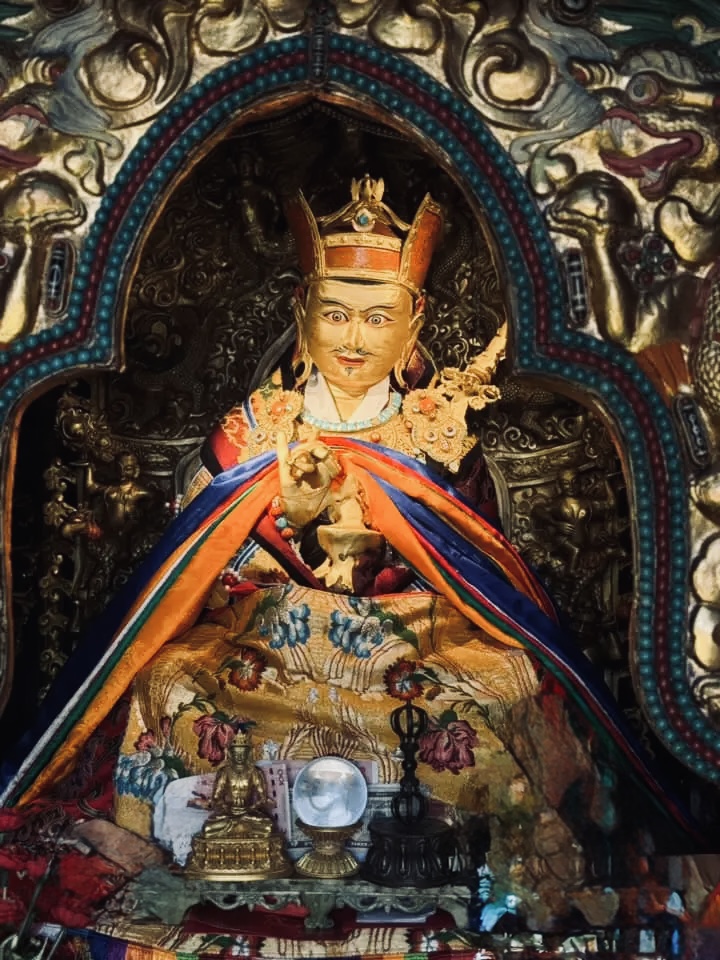
Guru Rinpoche day of the new year of the Rat. My aspiration for you in this
start of a new year is that you grasp the key points of practice—in particular,
keeping a big heart and a strong mind which in Tibetan is called “khokpa
chenpo”.
First of all, to be honest, even though we do need
to study in order to gain deeper knowledge of the Dharma, when it comes to
practice, a key ingredient is to keep it simple. Of course, it seems like there
are so many different practices we need to do, and so much we need to learn—but
actually, you should learn how to combine everything in a simple way. Being simple
helps to keep our practice more pure, more sincere. Don’t practice like an
intellectual who always has a lot of questions and doubts: practice is like
life, it is best kept simple. Simplicity in your practice will help you strike
the key points more directly. Thus, whatever you are practicing, just focus on
such key qualities as trust, caring, compassion, certainty, and devotion… and
don’t worry too much about the details!
Of course study and reflection are important, but
sometimes they can lead you astray. Learned people who have read many books end
up discussing the different Dzokchen styles of different lamas… there
is no Dzokchen style! The mind has no style! Likewise, when it
comes to practice, it is not a matter of style, or even of ‘high’ or ‘low’
practices, but, as Chokgyur Lingpa said about all teachings and lineages of
Buddhism, “the ultimate goal and
destination remain the same—the single final intent of the Victorious Ones, of
all the sutras and tantras, scriptures and commentaries.” As the great terton himself said, spending time
focusing on the slight differences between teachings and teachers—the different
ways they place their vajra and bell, and so on—is meaningless, deluded, and
even harmful to yourself and others. It is most important to understand that
the value of all the teachings of the Buddha is the same, and the goal is the
same.
So, rather than focusing on
superficial differences, try to remember the key points of practice, and the
basics of having big heart and a strong mind. Such a big heart is the
foundation of all human and spiritual values. It will support your Dharma
practice as well as bring you mundane happiness. What do I mean by a big heart
and a strong mind? I mean being stable, steadfast, and patient—neither moody
nor easily affected, neither easily excitable nor easily disheartened; and being
open-minded, kind, and understanding—neither easily influenced by others nor
quick to judge. When we have these qualities, we make fewer mistakes, cause
less harm, create fewer misunderstandings, and stay happier.
That’s why, on this first
Guru Rinpoche day of the year, I would like to remind you all to cultivate a
big heart and a strong mind. Try to check yourself and notice how broad and
open your mindset is, how kind and patient your attitude, and how strong and
steadfast your heart. In order to improve in your practice, the key is to
always remind yourself of these qualities, and counsel yourself in cultivating
them. If you truly keep this in mind, you cannot go wrong and that is called
“khokpa chenpo”.
Sarva Mangalam,
Phakchok Rinpoche
Translations
简体中文
繁體中文
Français
Deutsch
Bahasa Indonesia
日本語
नेपाली
Portugues
Русский
Español
ภาษาไทย
Українська
Việt Ngữ